 by Angela V
 I don’t know about you, but parenting teens right now feels… different.
It’s not just “how much screen time are they getting?” anymore. It’s what they’re seeing, how fast things are changing, and how much of it is completely out of our control.
We’re raising kids in a world of AI, social media, group chats, viral trends… and honestly, it can feel like a lot. It is all so different from the world our parents navigated when raising our generation.
And the tricky part? Even when you feel like you’ve put good boundaries in place, it doesn’t stop everything.
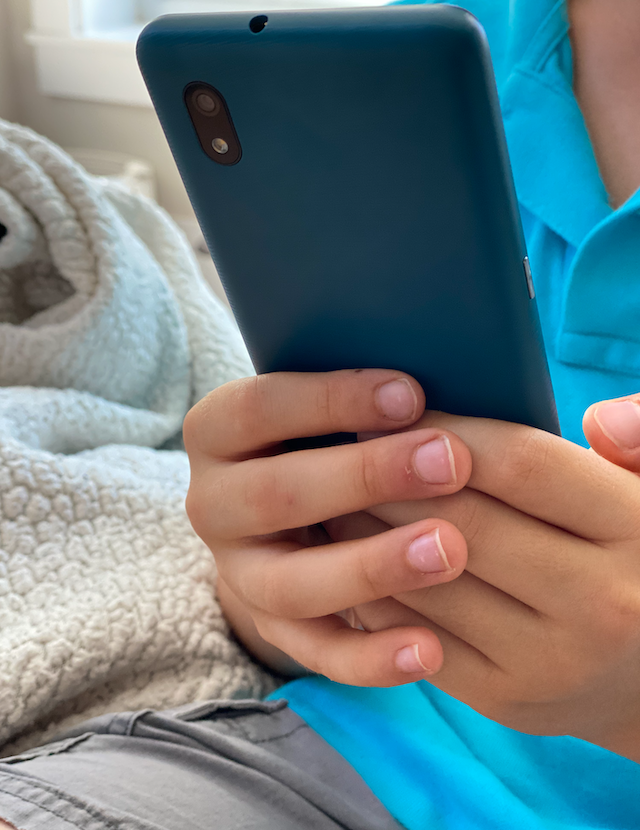
For example, my eldest has a phone with full parental restrictions. We’ve been really intentional about it. Limits, settings, all of it. But here’s the reality no one really talks about enough: not every kid has those same rules.
So things still come up. At school. On the field. Hanging out with friends. Someone shows a video. Someone talks about something they saw. Something gets shared in a group setting, and suddenly your kid is exposed to things you didn’t choose or plan for.
That was a bit of a wake-up call for me because it made me realize, it’s not just about controlling access. It’s about preparing your kids for what they’ll inevitably come across.
And now with AI, it’s a whole new level, because not everything they see is real anymore, and that’s a lot for kids (and honestly, even for us adults) to wrap their heads around.
So many images can be fake and altered, and videos can be edited to look completely real. Even conversations can be generated now, including people taking their photos and videos to create fake images and videos featuring them.
There’s so much good in it, too, the amount of learning you can do online, creativity, all of that. But it also means we need to be talking about it more.
If there’s one thing I’m learning, as a mom of a tween/almost teen, and a full teenager, it’s this: open communication matters more than any restriction. I want my kids to feel comfortable coming to me and saying: “Hey, I saw something today…”, or “My friend showed me this…”, or “I don’t think this is real, but I’m not sure…”
I don’t want them to worry or think they’re going to get in trouble or have everything taken away. And the truth is, they are going to see things we can’t prevent it all. But we can make sure they don’t have to figure it out alone.
For us, it’s not big formal talks; they sometimes feel like a lecture and not the way to relate to teens. It’s little conversations here and there, when we are in the car, at the kitchen counter. Just at random times where something comes up, and we just… talk about it.
If you’re in this stage too, here’s a list of some important things I keep coming back to myself:
- Boundaries matter, but they’re not the whole solution.
- Staying connected matters more than being “perfect”.
- Curiosity works better than reacting (this one is hard to implement but working at it).
- Being someone they can talk to is everything.
- Slowing it down where we can, going back to basics.
- More real life connetion, doing things together, vs everyone on their screens.
At the end of the day, we’re not just raising kids who know how to use technology; we’re raising kids who need to understand it, question it, and navigate it in a world that doesn’t always filter things for them. And that’s our biggest job right now!
What are your thoughts on this?